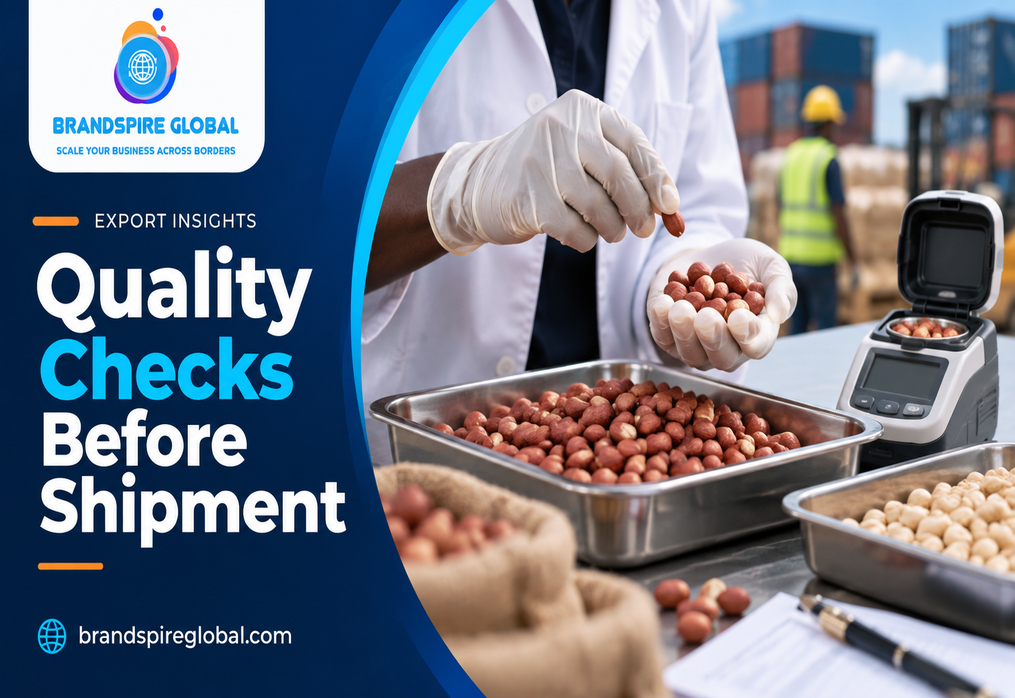
 by BrandspireGlobal
What to Look for When Exporting Palm Kernel Shells
What to Look for When Exporting Palm Kernel Shells
Drive past traditional oil palm milling clusters across southern Nigeria—from Edo and Ondo down to Imo, Akwa Ibom, and Cross River—and you used to see dark, curved mounds of cracked shells sitting untouched behind the extraction sheds. Local communities used them occasionally to pave muddy farm tracks, fill potholes, or fire village blacksmith hearths. For decades, the industry considered them agricultural leftovers.
Today, that narrative has shifted completely.
As global heavy industry races to phase out thermal coal, palm kernel shells (PKS) have become a vital solid biofuel. Commercial power plants in Japan, industrial cement kilns across Europe, and paper mills throughout Asia are buying thousands of metric tons every month. They prize PKS for its high heat density, low sulfur content, and uniform combustion characteristics.
However, buying or shipping PKS is not as simple as shoveling shells into a container and sending it out to sea. In international biomass trade, small oversights in moisture levels, foreign matter, or loading practices can lead to rejected vessels, steep penalty deductions, or spontaneous heating during ocean transit.
If you are an international procurement director, a local agro-processor, or an aspiring non-oil exporter, here is everything you need to know about what to look for when exporting palm kernel shells.
What Is Palm Kernel Shell (PKS) and Why Is Demand Exploding?
Palm kernel shells are the hard, fibrous endocarp fragments left behind after the fresh oil palm fruit (Elaeis guineensis) is processed. First, the outer fleshy mesocarp is pressed to yield crude palm oil (CPO). The remaining inner nut is then cracked to extract the lucrative palm kernel (which is crushed for palm kernel oil). The shattered woody shell remaining after that second crack is PKS.
Fresh Fruit Bunch (FFB) ──► Fleshy Pulp Pressed ──► Crude Palm Oil (CPO)
│
▼
Hard Inner Nut
│
┌────────────────┴────────────────┐
▼ ▼
Palm Kernel Seed Palm Kernel Shell (PKS)
(Crushed for PKO & Cake) (Screened & Dried Biomass Fuel)
The surge in global demand is rooted in distinct industrial advantages:
- Natural Pellet Performance: Unlike wood pellets, which require energy-intensive grinding, drying, binding, and extruding, PKS is formed naturally by the tree. It possesses a high natural bulk density and can be fed directly into commercial boilers alongside or in place of thermal coal.
- Clean Environmental Footprint: Burning coal releases high levels of sulfur dioxide ($SO_2$) and nitrogen oxides ($NO_x$). Good quality PKS contains less than 0.1% sulfur, drastically cutting emissions and equipment corrosion in power facilities.
- Cost-Effective Calorific Value: High-grade PKS delivers between 4,000 and 4,400 kcal/kg (approx. 16.5 to 18.5 MJ/kg), offering a dependable heat-to-cost ratio for energy-intensive manufacturing.
Social Snippet / Punchy Insight: Palm kernel shells require zero chemical binders or mechanical pelletizing. Nature has already engineered one of the world’s most resilient industrial biofuels.
Essential Quality Standards and Specifications for PKS Export
When drafting an international sales contract, commercial buyers and inspection agencies rely on exact laboratory thresholds. A shipment that fails these numbers will immediately trigger price discounts or outright contract default.
| Parameter | Premium Export Grade | Standard Commercial Grade | Rejection Limit |
| Gross Calorific Value (GCV) | 4,200 – 4,500 kcal/kg | 3,900 – 4,100 kcal/kg | Below 3,800 kcal/kg |
| Moisture Content (as received) | 10% – 15% | 15% – 20% | Greater than 22% |
| Ash Content | Below 3.0% | 3.0% – 5.0% | Greater than 6.0% |
| Foreign Matter / Sand / Rocks | Below 1.0% | 1.0% – 2.0% | Greater than 3.0% |
| Fiber & Soft Debris Content | Below 2.0% | 2.0% – 5.0% | Greater than 6.0% |
| Sulfur Content | < 0.05% – 0.08% | < 0.10% | Greater than 0.15% |
| Particle Size Distribution | 5 mm to 35 mm | 4 mm to 40 mm | High share of dust (<2mm) or large clogs |
Here is a closer look at what these parameters mean during field inspection:
- Moisture Content: The Number One Value Killer
Nothing sinks an export deal faster than excessive water. Freshly cracked shells from wet-milling processes often carry moisture levels between 22% and 30%.
Water adds dead freight weight during maritime transit. More critically, high moisture reduces net calorific heat output: the boiler has to expend energy evaporating water before it can generate usable heat.
Furthermore, damp biomass stored inside closed holds or hot containers generates mold and increases the risk of microbial decomposition, which leads to self-heating. Premium export contracts typically set the ceiling at 15% moisture content. Achieving this requires spreading the shells on concrete drying pads or utilizing industrial rotary dryers before bagging or bulk loading.
- Calorific Value (Gross vs. Net)
Calorific value determines the energy yield per metric ton. Grinders evaluate two numbers:
- Gross Calorific Value (GCV): The total heat released under laboratory conditions.
- Net Calorific Value (NCV) or Lower Heating Value (LHV): The actual usable heat delivered after accounting for moisture loss during combustion.
High-grade Nigerian PKS delivers a consistent GCV between 4,000 and 4,400 kcal/kg. If lab tests show a value below 3,800 kcal/kg, it usually points to high moisture dilution or heavy sand contamination.
- Ash Content and Slagging Risks
When biomass burns, minerals left behind form ash. Clean palm shells have a natural ash content around 2% to 4%.
If tests reveal ash levels above 6%, the cargo is almost certainly contaminated with soil, clay, or grit picked up from unpaved mill yards. In industrial boilers, high ash leads to “slagging” and “fouling”—molten minerals coat boiler tubes, impeding heat transfer and forcing expensive maintenance shutdowns.
PKS with High Sand/Dirt ──► Enters Boiler Furnace ──► Melts into Sticky Slag ──► Coats Heat Exchanger Tubes ──► Unplanned Plant Shutdown
- Impurities: Sand, Fiber, and Residual Palm Cake
Industrial burners require clean, hard shells. They do not want soft mesocarp fibers, palm kernel meal dust, or stones.
Loose fibers burn unevenly and produce smoke, while stones damage automated pneumatic conveying feeds. Reputable exporters run raw shells through mechanical vibrating screens, trommel drums, and air separators to blow away light fibers and screen out dirt before bagging.
What to Look for in Palm Kernel Shells Suppliers
Finding shell piles is relatively easy; securing hundreds of metric tons of uniform, lab-verified, export-ready material each month is where most brokers stumble. When auditing potential PKS suppliers in Nigeria or West Africa, prioritize these four criteria:
- Sourcing Infrastructure and Processing Yard Standards
Ask to see photos or conduct a physical audit of their consolidation yards.
- Do they store raw shells directly on red earth or mud? If so, bottom layers will inevitably collect rocks and clay.
- Do they have a paved concrete aggregation floor?
- Do they have covered warehouse sheds to protect dried inventory during the heavy southern rainy season (May through October)?
A supplier without covered drying pads will struggle to maintain moisture below 15% when the rains arrive.
- Independent Lab Certification
Never rely solely on internal seller claims. Authentic exporters routinely work with accredited third-party laboratories such as SGS, Bureau Veritas, or Cotecna.
Before goods move to port, inspectors take composite samples to verify calorific value, moisture, ash, and volatile matter. If an agent hesitates to provide independent test reports from recent runs, proceed with caution.
- Scalable Monthly Tonnage
Biomass power plants work on massive volumes. Single test shipments might move in 20-foot containers (roughly 20 to 25 metric tons in bulk or jumbo bags), but long-term buyers frequently require 1,000 to 5,000 metric tons monthly, eventually scaling to bulk vessel charters (Handysize vessels carrying 15,000 to 30,000 metric tons).
Confirm whether your supplier controls direct relationships with major commercial palm oil mills (such as Presco, Okomu, or regional cooperative mill clusters) or if they are simply hunting for spot volume on local markets.
Social Snippet / Punchy Insight: A low quote on palm kernel shells is meaningless if half the shipment is wet fiber and earth. True margins come from uniform calorific delivery.
Exporting Palm Kernel Shells from Nigeria: Logistics and Documentation
Successfully shipping PKS from Nigeria requires clear coordination between inland transport, warehouse aggregation, statutory documentation, and terminal handling.
Mill Yard Aggregation ──► Screening & Sun-Drying ──► Moisture & Lab Testing ──► Containerization / Trucking ──► Port Clearance & Loading
- Shipping Methods: Containerized vs. Bulk Vessels
- 20-Foot Dry Containers (FCL): Ideal for smaller buyers, trial orders, or niche industrial plants. PKS is either loaded in 1-metric-ton jumbo polypropylene bags or blown directly into the container as loose bulk (often lined with heavy-duty container liners). A standard 20ft container accommodates approximately 18 to 22 metric tons depending on shell density and weight limits.
- Bulk Vessel Charter: Required for large-scale energy contracts bound for primary off-takers in Europe or East Asia. Cargo is trucked in tippers directly to dedicated bulk berths at ports such as Port Harcourt (Onne Port), Calabar, Warri, or Lagos (Apapa/Tin Can Island).
- Critical Export Documentation Checklist
To ensure your cargo sails smoothly and clears destination customs without demurrage or regulatory hold-ups, verify that the following statutory paperwork is in order:
- Nigeria Export Proceeds Form (Form NXP): Handled digitally through the trade portal with your commercial bank and the Central Bank of Nigeria (CBN).
- Nigerian Export Promotion Council (NEPC) Certificate: Proof that the entity is officially registered and licensed for commercial non-oil exports.
- Clean Certificate of Inspection (CCI): Issued by government-appointed pre-shipment inspection agents (such as Cobalt, Neroli, or Arlington).
- Phytosanitary Certificate: Issued by the Nigeria Agricultural Quarantine Service (NAQS), certifying that the cargo is free of quarantine pests and biological contaminants.
- Commercial Invoice & Detailed Packing List: Clearly specifying gross/net weights, container numbers, and product description.
- Certificate of Origin: Validating Nigerian origin (essential for preferential tariff regimes).
- Full Set of Clean on Board Ocean Bills of Lading: Released by the shipping line once the containers or bulk parcel are secured on the vessel.
Common Mistakes Exporters Make (And How to Avoid Them)
- Shipping Wet Cargo to Meet Deadlines: When deadlines loom and drying yards are damp, inexperienced traders may load wet shells hoping they will dry during the voyage. Inside a sealed ocean container moving across maritime climates, wet biomass sweats. It breeds thick mold, drops the calorific value, and can cause spontaneous combustion inside the vessel hold. Always hit your moisture targets before loading.
- Ignoring Container Weight Regulations: PKS is dense. If you load loose bulk into a 20-foot container, you can easily exceed maximum gross weight limits (typically 28 to 30.5 metric tons container capacity) long before filling the volumetric cubic space. Overloaded containers face steep terminal penalties or refusal at the gantry crane.
- Skipping Container Liners for Loose Bulk: When exporting loose bulk in containers, unlined floors allow fine black dust and residual palm oils to seep into the container floorboards. Shipping lines will hit you with heavy cleaning or floor replacement surcharges upon return. Use heavy-duty, food- or industrial-grade woven container liners.
- Poor Contract Specifications: Avoid vague contractual terms like “standard merchantable quality.” Always tie contract price and acceptance to exact metrics: Gross Calorific Value, Moisture Content, Ash Content, and Foreign Matter percentages. Include clear adjustment formulas for slight moisture deviations.
FAQ
What is the typical calorific value of export-grade palm kernel shells?
High-quality export-grade palm kernel shells (PKS) feature a Gross Calorific Value (GCV) ranging between 4,000 and 4,400 kcal/kg (approximately 16.5 to 18.5 MJ/kg). This high energy output makes them an effective biomass alternative to thermal coal in heavy industrial boilers and biomass power plants.
What is the maximum acceptable moisture level for PKS export?
The standard maximum moisture limit for commercial export is generally 15% (as received). Moisture levels above 18%–20% lower the net heating value, increase shipping weight unnecessarily, and create significant risks of fungal growth and spontaneous combustion during ocean voyages.
What are the main industrial uses of palm kernel shells?
PKS is primarily used as:
- Solid biomass fuel for co-firing in coal-fired power stations.
- Thermal energy fuel for industrial steam boilers in cement, rubber, paper, and textile factories.
- Raw material for high-grade activated carbon production due to its hard, carbon-dense physical structure.
- Aggregates in specialized lightweight concrete applications.
How much palm kernel shell fits into a 20-foot shipping container?
A standard 20-foot dry shipping container typically holds between 18 and 22 metric tons of palm kernel shells, depending on whether it is packaged in 1,000 kg jumbo bags or loaded in loose bulk using a fitted container liner.
What quality tests are required before shipping PKS from Nigeria?
Standard pre-shipment quality verification includes an ultimate and proximate laboratory analysis performed by accredited inspection agencies like SGS or Bureau Veritas. The test evaluates Gross Calorific Value (GCV), Moisture Content, Ash Content, Volatile Matter, Fixed Carbon, and Total Sulfur.
Building a Resilient Biomass Supply Line
The international transition to renewable energy continues to accelerate, and palm kernel shells have moved permanently from agricultural byproduct to high-demand global fuel.
For international industrial buyers, Nigeria presents a strong supply base: expansive palm belts, year-round production, competitive pricing, and open commercial markets. However, capturing value requires strict adherence to technical standards. You need dry, screened shells with high calorific heat, low ash, and complete, auditable export documentation.
Whether you are looking to secure regular containerized shipments, audit a regional processing yard, or source reliable non-oil agricultural commodities with verified third-party quality testing, working with an experienced partner on the ground protects your investment.
Ready to lock in consistent, export-grade biomass shipments or request comprehensive lab specifications for your procurement team? Connect with our trade specialists at Brandspire Global to streamline your West African commodity sourcing with complete confidence.